)
)
)
The “Integration” of Integrative Mental Health: A Systems View of the Fully Relational and Embodied Mind
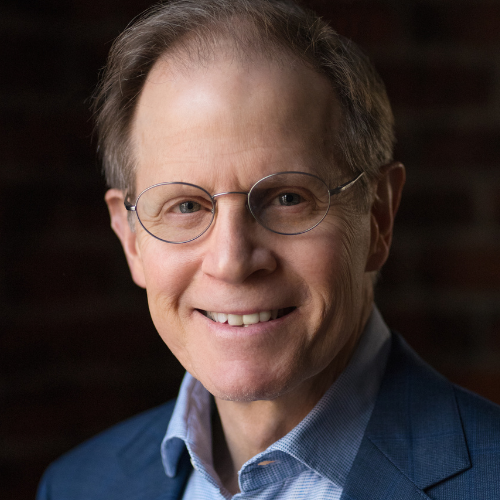
In this closing keynote address, Dan Siegel will offer a consilient view—one that builds on the findings of independent pursuits of knowledge—from the lens of the interdisciplinary framework of interpersonal neurobiology that offers a working definition of the mind and mental health. Through this perspective, mental suffering is seen as layers of chaos or rigidity that are shifts away from the mental flourishing FACES state of flexibility, adaptability, coherence, energy, and stability. What enables us to live within this state of resilience and mental strength is a process of linking differentiated parts of a complex system, a connection in which the essence of the components is not lost in the linkage. We can name this process, “integration”, and it is the mathematical property of complex systems that optimizes self-organization. In this way “mind” can be seen to be the emergent property of complex systems of energy and information flow, with the familiar three facets of subjective experience, consciousness, and information processing as emerging from energy flow. But the location of that flow is not limited by skull nor skin, and so we see this “mind” as fully embodied and fully relational. One additional facet of mind is the mathematically established aspect of complex systems, the emergent property of “self-organization.” Optimal self-organizes is bounded on one side by chaos, on the other by rigidity. And the center flow, like a river of integration, has that FACES flow that arises with the differentiation and linkage of components of the system—of their integration as we are defining that term. In this way, we can offer a fourth facet of mind as “the embodied and relational, emergent self-organization process that regulates the flow of energy and information.” Over the last third of a century, this definition of one facet of the mind has provided a useful foundation for clinical application into how to understand and promote mental flourishing. Optimal self-organization arises with integration—the basis of mental health.

.jpg.png)
)
)
)
)
)
)
)
)
)
)
)
)
)
)
)
)
)
)
)
)
)
)
)
)
)
)
)
)
)
)
)
)
)
)
)
)
)
)
)
)
)
)
)
)
)
)
)
)
)
)
)
)
)
)
)
)
)
)
)
)
)
)
)
)
-(1).png/fit-in/150x9999/filters:no_upscale())
)
)
)
)
)
)
)
)
)
)
)
)
)
)
)
)
)
)
)
)
)
)
)
---RGB---web.jpg.png/fit-in/150x9999/filters:no_upscale())
---RGB---web.jpg.png/fit-in/150x9999/filters:no_upscale())
)
)
)
)
)
)
)
)
)
)
)
)
)
)
)
)
)
)
)
)
)
)
)
)
)
)
)
)
)
)

)
)
)